
In This Article
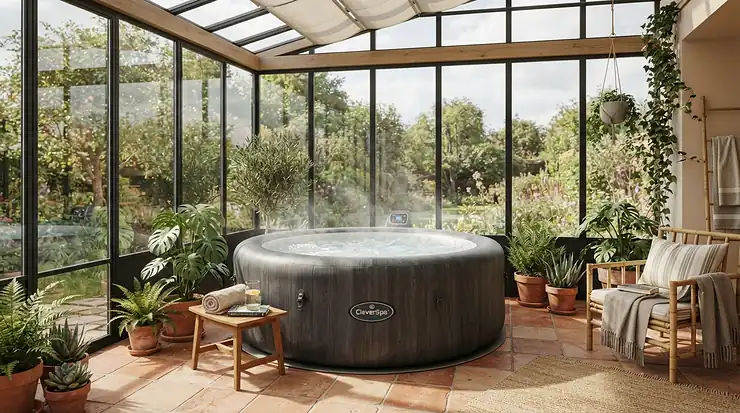
Picture it. Dusk, a chill in the air, and a tub of 104°F water waiting for you. Now picture one of two very different things happening to your lower back. In one version, a cloud of warm bubbles fizzes past like a gentle crowd. In the other, a pivoting stream of water finds the exact knot you’ve been carrying since Tuesday. That gap is the whole airjet vs hydrojet inflatable hot tub debate, and it affects your comfort, your electric bill, and your budget.
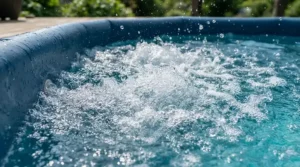
What is an airjet vs hydrojet inflatable hot tub comparison? It comes down to one question: does the massage come from air or from water? AirJet tubs push warm air through rows of small floor and wall openings for a soft, all-over fizz. HydroJet tubs keep those bubbles and add pump-driven, aimable water nozzles for focused pressure.
Inflatable spas are air-filled vinyl shells, a category Wikipedia’s hot tub overview places alongside acrylic and rotomolded designs. They cost a fraction of the hard-shell price and need no concrete pad.
This guide covers the real trade-offs: jet pressure, massage intensity, the humble air blower, noise, energy use, and which seven tubs are worth shortlisting for 2026.
Quick Comparison: 7 Inflatable Hot Tubs Side by Side
Before the deep dive, here is the lineup at a glance. Prices are indicative ranges at the time of research and shift often, so check current price before buying.
| Product | Jet System | Seats | Typical Price Range | Best For |
|---|---|---|---|---|
| Bestway SaluSpa Hawaii HydroJet Pro | 8 HydroJets + 140 AirJets | 4-6 | $1,000-$1,400 | Targeted back and shoulder relief |
| Bestway SaluSpa Santorini HydroJet Pro | 10 HydroJets + 180 AirJets | 5-7 | Over $1,200 | Big households wanting maximum massage |
| MSpa Elite Baikal | 4 hydromassage jets + 118 air jets | 4 | $1,000-$1,300 | Couples wanting a hydro option |
| Bestway SaluSpa Hawaii AirJet | 140 AirJets | 4-6 | $600-$900 | Families who value soft bubbles |
| Bestway SaluSpa Miami AirJet | AirJets | 2-4 | $500-$800 | First-time buyers on a budget |
| MSpa Tekapo | 132 air jets, 700W blower | 6 | $700-$1,000 | Social soaking with strong bubbles |
| Intex PureSpa Plus | 140+ bubble jets | 4-6 | $850-$1,150 | Muscle-friendly bubble massage |
The table shows a clear price split. Every tub with real water jets sits at the top of the range, while the air-only models cluster lower. The Bestway SaluSpa Hawaii HydroJet Pro and Bestway SaluSpa Hawaii AirJet share a footprint, so the roughly few-hundred-dollar gap between them is the clearest measure of what directed water pressure costs. Budget buyers should note that the Bestway SaluSpa Miami AirJet keeps the entry price low by dropping both capacity and fancy extras.
💬 Just one click — help others make better buying decisions too!😊
Top 7 Inflatable Hot Tubs: AirJet vs HydroJet Expert Analysis
Quick naming note: Bestway sells these as SaluSpa in the U.S. and as Lay-Z-Spa in the UK and Europe. The jet systems are the same idea under two labels.
1. Bestway SaluSpa Hawaii HydroJet Pro — dual massage in a square tub
The headline feature is the pairing: eight pivoting sidewall nozzles working over a floor of 140 AirJets. The tub measures about 71 x 71 x 28 inches and holds roughly 210 gallons. Retailers rate it for four to six people, though a square 71-inch tub feels comfortable at four.
On paper, the twist-ring flow control matters most. You can dial the nozzles gentler for a social soak or firmer when your shoulders need a talking-to. The AirJet floor also has two intensity levels. A brand-affiliated comparison cites a filter pump flow of 320 gallons per hour.
Based on the spec comparison, this is the tub for someone who wants the bubbles and the pressure in one package. Review roundups from Family Handyman and PopSci both single it out as the hydro-jet pick, praising its build quality and cup holders. I couldn’t verify a large pool of individual owner reviews, so treat that as roundup sentiment rather than a rating.
Pros:
- ✅ Adjustable, pivoting nozzles for targeted pressure
- ✅ Bubbles and water jets run together
- ✅ Freeze Shield and built-in chemical dispenser
Cons:
- ❌ Pump is noisier than air-only tubs
- ❌ Costs more upfront and uses more power
Price: upper-mid range, roughly $1,000-$1,400, so check current price. Verdict: the best-balanced answer to the Bestway SaluSpa Hawaii HydroJet Pro vs airjet question.

2. Bestway SaluSpa Santorini HydroJet Pro — the biggest massage in the lineup
Scale is the story. A 2023 comparison lists ten hydro jets and 180 air jets for five to seven people. That is noticeably more coverage than the Bestway SaluSpa Hawaii HydroJet Pro. Specs shift between model years, so verify the current numbers on the listing.
More nozzles mean more bodies get a nozzle at their back. In a six-person soak, that is the difference between “everyone gets a jet” and “the lucky three get a jet.” The trade-off is physics: a larger tub holds more water to heat, so expect longer warm-up times and a steadier appetite for electricity.
For hosting, this is the strongest argument in the whole inflatable hot tub with hydrojet massage category. Retailer listings describe app and Wi-Fi control on newer versions, which helps when you want the water warm before you walk outside. Reviewer sentiment is harder to pin down because the model gets revised often, so read recent reviews on the exact version you’re buying.
Pros:
- ✅ Most jets in this comparison
- ✅ Seats five to seven comfortably
- ✅ Smart control on newer versions
Cons:
- ❌ Needs more space and more heat-up time
- ❌ Premium price tag
Price: premium, often north of $1,200. Verdict: worth it only if you regularly fill seven seats.
3. MSpa Elite Baikal — a hydro option for two to four people
The MSpa Elite Baikal takes a different approach. Retail listings describe four hydromassage jets plus 118 air jets for up to four people, with a wired controller, ozone system and anti-icing function. Business Insider’s roundup has named an MSpa Elite model its pick for hydro jets.
The owner’s manual for the Elite series notes that the maximum-power combination runs air and hydro jets together, so you can stack the two. That layering is the real selling point. Four hydro jets can’t match the coverage of eight, but in a four-person tub they hit the places that matter most.
Ozone is a supplement, not a replacement for proper sanitizer, so plan on regular water testing regardless. For couples, the MSpa Elite Baikal hits the sweet spot of directed massage without the footprint and heat bill of the bigger Bestways.
Pros:
- ✅ Four hydro jets plus 118 air jets
- ✅ Air and hydro can run together
- ✅ Anti-icing function for cooler weather
Cons:
- ❌ Fewer hydro jets than Bestway rivals
- ❌ Seats four, not a crowd
Price: roughly $1,000-$1,300. Verdict: strong for couples and small households.
4. Bestway SaluSpa Hawaii AirJet — soft bubbles in the same square footprint
Same 71-inch square frame as the HydroJet sibling, but with 140 AirJets and no water nozzles. Listings state it heats up to 104°F, uses MaxHold internal beams for shape stability, and comes in smart versions with app control.
That makes it the cleanest test of the airjet vs hydrojet question: same shape, same seating, different massage. Air bubbles deliver a lighter, more enveloping sensation. If your goal is a chatty evening with friends rather than rehab for a tight trapezius, this is the better deal.
Reviewers across roundups tend to describe air-only tubs as relaxing but gentle, and this model fits that pattern. I couldn’t verify a robust pool of owner reviews, so frame that as the general pattern for the category.
Pros:
- ✅ Same footprint as the HydroJet Pro version
- ✅ Quieter and simpler than water-jet tubs
- ✅ Smart app version available
Cons:
- ❌ No directed pressure on sore spots
- ❌ Bubbles cool the water faster than a closed system
Price: roughly $600-$900. Verdict: the sensible default for relaxation-first households.
5. Bestway SaluSpa Miami AirJet — the budget on-ramp
For first-time buyers, the Bestway SaluSpa Miami AirJet is the low-risk entry. Roundups highlight an adjustable digital control panel, an included cover, puncture-resistant construction and a power-saving timer. It’s built for two to four people.
The smaller volume cuts both ways. Less water means faster heating and lower energy use, but fewer people and less room to stretch your legs. It also lacks any hydro option, so it’s a pure bubble jet inflatable spa for relaxation.
Sentiment in one Amazon-focused roundup covering several SaluSpa-family tubs was mixed on materials. Some reviewers felt components were cheaper than hoped, and a few mentioned replacing the heat pump. Take that as a reminder to keep your warranty paperwork handy.
Pros:
- ✅ Lowest entry price in this lineup
- ✅ Small volume heats and recovers quickly
- ✅ Digital control and power-saving timer
Cons:
- ❌ Seats only two to four
- ❌ Some owners report budget-feeling components
Price: roughly $500-$800. Verdict: a smart first tub if you’re testing whether hot tub life suits you.
6. MSpa Tekapo — the 700W air blower crowd-pleaser
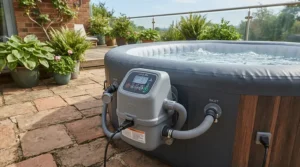
The MSpa Tekapo is the air-blower story in tub form. Listings describe 132 air jets fed by a 700W massage air blower (some listings state 680W), plus a 1,350W heater, 104°F maximum, four-hour auto filtration and safety buckles that tie the lid to the ground mat.
A bigger blower generally means a stronger, denser bubble stream across the same number of jets. That raises massage intensity without adding a water pump. It’s the middle path for people who want more punch than basic bubbles but don’t want the noise and cost of hydro nozzles.
The review pool here is smaller than for the Bestway and Intex giants, so be cautious about reading too much into ratings. It’s a six-person square design, which works well for family soaking.
Pros:
- ✅ Powerful 700W blower for strong bubbles
- ✅ Seats six in a square layout
- ✅ Auto-filtration and safety buckles
Cons:
- ❌ No hydro nozzle option
- ❌ Smaller review pool than rivals
Price: roughly $700-$1,000. Verdict: best for bubble-lovers who want more oomph.
7. Intex PureSpa Plus — the muscle-friendly bubble classic
This Old House named the Intex PureSpa Plus its pick for muscle relief. It carries over 140 bubble jets (some retailers advertise 170), two built-in headrests and an insulated cover. It also includes a hard-water treatment system and a thermal ground cloth.
Jet count tells only part of the story. Intex leans on a robust air blower and a supportive wall design, so the tub feels stable when you lean against it. That makes it a strong benchmark for what a no-hydro tub can do.
Negative reviewers in the same roundup said air escaped from the walls and that the tub used a lot of electricity. BestReviews also found the included cover too heavy for some to lift easily. Those complaints are common in the category, so budget for a lighter cover lift or a second pair of hands.
Pros:
- ✅ Over 140 jets with built-in headrests
- ✅ Includes hard-water treatment system
- ✅ Stable, supportive wall construction
Cons:
- ❌ Reports of slow air loss and high power use
- ❌ Heavy cover for some users
Price: roughly $850-$1,150. Verdict: the best bubble-only option for sore muscles.
How to Choose an AirJet or HydroJet Inflatable Hot Tub
Choosing between jet systems is less about specs and more about your body, your budget and your yard. Work through these steps in order.
- Decide your massage goal. If you want a social soak and gentle fizz, an AirJet tub is enough. If you want pressure on sore spots, you need hydro nozzles.
- Count your regular soakers. Add a seat for comfort. A “six-person” tub is cozy with four.
- Check your power supply. Hydro pumps add load on top of the heater and blower. Confirm your outlet and breaker can handle the draw.
- Think about noise. Brand-side guidance notes that HydroJet Pro models run louder than AirJet because the water pump works at pressure.
- Look at your climate. Freeze Shield or anti-icing functions matter in cold regions.
- Set a realistic budget. Include the cover, chemicals, a ground mat and electricity.
- Read recent reviews on the exact version. Models get revised, and old complaints may not apply.
On paper, these seven steps filter most buyers into one of two groups. People who answer “relaxation” lean toward a bubble jet inflatable spa for relaxation. People who answer “recovery” belong in the hydro camp. If you are on the fence, the middle path is a high-blower air tub like the MSpa Tekapo.
Jet Pressure Explained: What the Numbers Mean
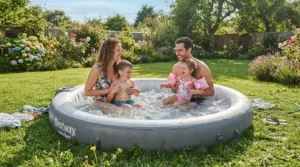
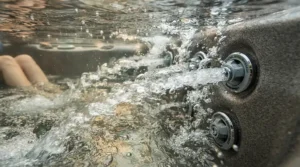
Jet pressure is the force with which water or air leaves a nozzle, and it behaves very differently in each system. In an AirJet tub, pressure comes from the air blower pushing air through small holes. The force is spread across many outlets, so each bubble stream is gentle. Adjusting jet pressure usually means choosing a blower speed, and many tubs offer two or three levels.
In a HydroJet tub, pressure is generated by a water pump pushing a concentrated stream through a nozzle. The twist ring on each nozzle changes flow, so you can raise or lower jet pressure at that single spot. A brand-affiliated explainer describes the twist bezel as giving “more pressure for deep-tissue work” or a gentler flow, depending on the setting.
What the spec sheet won’t tell you is how noticeable the difference is in practice. Air pressure feels like fizz. Water pressure feels like a hand. Two airjet vs hydrojet inflatable hot tub models with similar jet counts can feel completely different because the jets aren’t doing the same job.
If you want to dial in jet pressure on a budget, look for a model with a multi-speed blower. If you want real targeted force, choose water nozzles.
| Feature | AirJet | HydroJet Pro |
|---|---|---|
| Pressure source | Air blower | Water pump plus blower |
| Adjustability | Blower speed levels | Per-nozzle flow and aim |
| Feel | Soft, enveloping | Focused, firm |
| Noise | Lower | Higher |
| Best For | Social soaking | Targeted muscle work |
The table makes the trade-off visible: AirJet gives you coverage, HydroJet gives you precision. The key detail is that hydro tubs still include the air bubbles, so you rarely lose anything on the soft-massage side. Choose AirJet if peace and quiet matter more than muscle work.
Massage Intensity: What Each System Actually Feels Like
Massage intensity is the part buyers struggle to judge from a product page. It is a feeling, not a spec, so here is how to translate it.
AirJet intensity is broad and shallow. The bubbles warm and tickle the skin and lightly stimulate the surface muscles. After a long day this is soothing, but it won’t reach a stubborn knot. The Hawaii AirJet and Miami models fall squarely here.
HydroJet intensity is narrow and deep. A pivoting nozzle can be aimed at the lower back, shoulder blade or calf, and the twist ring lets you step the strength up or down. That is closer to the experience of a hard-shell spa.
Warm water on its own does real work, too. The Cleveland Clinic’s overview of hydrotherapy notes that warm immersion increases blood flow and can reduce pain and inflammation, and it points to warm soaking for chronic back pain because it relaxes muscle. The jets add mechanical pressure on top of that heat.
A practical test for massage intensity: do you currently use a massage gun, a foam roller, or a deep-tissue masseuse? If yes, you probably want hydro nozzles. If your wind-down routine is a hot bath and a book, AirJet or a strong-blower tub like the Intex PureSpa Plus will do nicely.
The Air Blower: The Unsung Hero (and the Noise Source)
Every inflatable spa has one, and almost nobody shops for it. The air blower is the motor that pushes air through every jet opening, and it sets the ceiling on bubble strength. In an air-only tub it is the entire massage engine. In a hydro tub it drives the bubble layer beneath the water jets.
Wattage is the number to watch. The MSpa Tekapo lists a 700W blower (some listings say 680W), while a number of mid-range tubs run smaller units. More wattage typically means a stronger, more consistent stream. It also means more noise and more power draw.
The blower has a hidden side effect: it pulls ambient air in and pushes it through your water. In cold weather that air cools the tub, which is why many owners run the blower in short sessions and switch it off to let the heater catch up. A review of Hawaii HydroJet Pro as a category pick notes that heat from the hydro pump partly offsets the cool air.
For quiet evenings, pick a tub with a multi-speed blower and drop to the lowest setting. For parties, crank it up. If you plan to place the tub close to a bedroom window, favor an air-only design with a modest blower. Noise is the single most common complaint across the category.
Inflatable Hot Tub With Hydrojet Massage vs Bubble Jet Inflatable Spa for Relaxation
Let’s put the two camps side by side, not as a table but as two ways of living with a tub.
An inflatable hot tub with hydrojet massage is a tool. You set it up, aim the nozzles, adjust the flow and use it to address something. It suits people who work with their bodies, lift things, sit at a desk for ten hours, or run. The Bestway SaluSpa Hawaii HydroJet Pro, the Bestway SaluSpa Santorini HydroJet Pro and the MSpa Elite Baikal all live here. You pay for the pump in money, power and noise.
A bubble jet inflatable spa for relaxation is a mood. The goal is warmth, fizz and conversation. It suits anyone whose main objective is unwinding, entertaining or soaking with kids. The Bestway SaluSpa Hawaii AirJet, Bestway SaluSpa Miami AirJet, MSpa Tekapo and Intex PureSpa Plus fit here, and they’re lighter on the wallet.
A fair caveat: hydro tubs aren’t just upgrades. The extra pump is another component that can fail, and one aftermarket listing for the Bestway family highlights water-pump and flow-sensor spare parts, suggesting these are common service items. That is not proof of poor reliability, but it is a reminder to check warranty coverage.
If you remain undecided, a strong-blower air tub is a solid compromise. You can always add a handheld jet massager later, a cheap trick that gives air-tub owners a taste of pressure.
✨ Don’t Miss These Exclusive Deals!
🔍 Take your backyard soak to the next level with these carefully selected tubs. Click on any highlighted product to check current pricing and availability. Pick the jet system that fits your body and your budget!
Long-Term Cost and Maintenance: HydroJet vs AirJet
The sticker price is the opening bid. Total cost of ownership is where the airjet vs hydrojet inflatable hot tub decision actually settles.
Hydro tubs add a pump that draws power during every session. A comparison of the Bestway Hawaii HydroJet Pro and Hawaii AirJet notes that the extra pump is the main reason hydro models consume more electricity, even when their other specs are nearly identical. Over a year of regular use, that gap adds up.
Maintenance differs too. Hydro nozzles have moving parts, so they need occasional cleaning and checking for scale. Hard water can trigger error codes on Bestway tubs, and retailers sell descalers specifically for four-pipe HydroJet models. If you live in a hard-water area, plan on a descaling routine.
| Factor | Inflatable (AirJet or HydroJet) | Hard-Shell Spa |
|---|---|---|
| Upfront cost | Low to mid | High |
| Installation | None to minimal | Often professional |
| Portability | Stores away | Fixed |
| Energy efficiency | Moderate; cover matters | Better insulation |
| Best For | Renters, trial buyers, seasonal use | Long-term, year-round owners |
Looking at the comparison above, inflatables win on flexibility and entry cost, while hard-shell spas win on insulation and longevity. Seasonal users and renters will rarely regret choosing an inflatable. People planning a ten-year, all-weather ritual should price a hard-shell alongside the Bestway SaluSpa Santorini HydroJet Pro.
Common Mistakes When Buying an Inflatable Hot Tub
Most regrets trace back to the same handful of errors.
Buying on jet count alone. A tub with 180 air jets and a weak blower can feel flatter than one with 132 jets and a strong 700W unit. Check the blower and, in hydro tubs, the pump.
Ignoring noise. Hydro pumps and large blowers are audible. If your tub will sit near a bedroom, this matters more than any spec.
Skipping the power check. A hydro tub plus heater plus blower can draw a lot. Confirm your outlet, extension rules and breaker before ordering.
Underestimating the cover. Heat loss is the largest running cost. One reviewer complaint on the Intex PureSpa Plus was a heavy cover, so check cover weight and handling.
Trusting the “six-person” label. Capacity ratings assume snug seating. Plan on four to five adults.
Forgetting the ground. A flat, solid, weight-bearing base is non-negotiable. A full tub weighs more than most people expect.
Believing a hydro tub is a spa-grade replacement. An inflatable hot tub with hydrojet massage is excellent for the price, but it’s not a hard-shell with 40 jets. Set expectations accordingly.
Safety, Temperature and Regulations: A Practical Guide
Inflatable tubs are easy to love and just as easy to misuse, so keep these rules close.
The U.S. Consumer Product Safety Commission has long advised that hot tub water should never exceed 104°F. The same guidance treats 100°F as safe for healthy adults and urges special caution for young children. You can read the original CPSC hot tub temperature warning, which also notes that thermostats can be off by as much as four degrees. Use a separate, accurate thermometer.
Other CPSC precautions worth following:
- Keep a locked safety cover on the tub when it’s not in use.
- Never allow children near the tub without constant adult supervision.
- Avoid alcohol, which raises drowning risk.
- Know where the pump cut-off switch is.
- Pregnant women and young children should talk to a physician before using a spa.
Put the tub on a flat, protected surface and plug it into a properly grounded, GFCI-protected outlet. Don’t improvise extension cords. Most manuals say so explicitly.
Transformation Guide 1: How to Set Up and Tune Your Tub for the Best Massage
Setup quality determines how the jets feel, so spend an extra twenty minutes here.
Pick the spot. Choose level, firm ground with room to walk around the tub. Lay the ground mat flat, with no stones underneath.
Inflate properly. Use the included pump or blower to inflate to the recommended level and check the gauge. An under-inflated tub sags, and an over-inflated one stresses seams.
Fill and heat. Fill to the marked line. Cover on, heater on, and allow the temperature to climb. Don’t rush it by overfilling.
Set the jets. For hydro tubs, aim nozzles at your lower back and shoulder blades first, then adjust the twist ring until it’s firm but not sharp. For air tubs, start the blower on low, then step up. Treat jet pressure as something you tune, not set once.
Soak smart. The Cleveland Clinic’s hot tub benefits guide suggests limiting soaks to about 15 minutes or less, since longer dips may worsen muscle pain. Plan short sessions and rehydrate.
Common first-30-day mistakes: forgetting to test water weekly, letting the filter cartridge clog, and running the blower constantly in cold weather. A simple weekly schedule fixes all three.
Transformation Guide 2: Real-World Scenarios — Which Jet System Fits Which Household?
Abstract advice only goes so far, so here are three profiles.
The desk-bound couple. Two remote workers, sore shoulders, a small patio. They want directed pressure but not a crowd. The MSpa Elite Baikal matches the seating and gives them four hydro jets, while the smaller footprint keeps heat-up times reasonable. Budget: around $1,000-$1,300.
The family of five with a tight budget. Weekend splashing, no medical goals, and a strict price ceiling. The Bestway SaluSpa Hawaii AirJet gives them a square footprint and soft bubbles for less. If the budget is even tighter, the Bestway SaluSpa Miami AirJet works for smaller groups.
The weekend athlete who hosts. Sore legs on Sunday and friends on Saturday. The Bestway SaluSpa Santorini HydroJet Pro handles the crowd, and the nozzles handle the quads. Higher spend, but it covers both roles.
For each profile, the question is the same: what is the tub for? Use that as your tiebreaker.
Transformation Guide 3: Problem → Solution for Weak Bubbles, Noise and Heat Loss
Problem: weak bubbles. Check for a clogged filter, a closed air inlet or low inflation. On air-blower tubs, step the blower up one level before assuming something is broken.
Problem: noisy pump or blower. Place the tub on a mat to absorb vibration, move it away from walls that reflect sound, and use lower settings at night. Hydro tubs are inherently louder, so accept some noise.
Problem: heat loss. Keep the cover on whenever you’re not in the water, add an insulated ground layer, and avoid running the blower for long periods in cold air. The Intex PureSpa Plus reviewers specifically flagged power use, so a tight cover discipline pays off.
Problem: error codes in hard water. Bestway hydro tubs are known to throw flow-related errors when scale builds up in the pipes. A descaler marketed for HydroJet models is a common fix, and softening or filtering fill water prevents recurrence.
Problem: cloudy water. Test and balance sanitizer, clean or replace filters, and shock the water after heavy use.
FAQ
❓ Is a hydrojet inflatable hot tub worth the extra cost over an airjet model?
❓ Do hydrojet inflatable hot tubs use more electricity than airjet ones?
❓ Can you adjust jet pressure on an inflatable hot tub?
❓ How loud is the air blower on an inflatable hot tub?
❓ What water temperature is safe for an inflatable hot tub?
Conclusion
The airjet vs hydrojet inflatable hot tub question has a refreshingly honest answer: neither wins in general, but one wins for you. AirJet tubs give you warmth, bubbles and a relaxed, social experience at a lower cost and noise level. HydroJet tubs give you everything the AirJet does, plus directed water pressure for the spots that actually hurt, in exchange for money, power and noise.
If you want the all-rounder, the Bestway SaluSpa Hawaii HydroJet Pro is the cleanest pick. For crowds, the Bestway SaluSpa Santorini HydroJet Pro has the most jets. Couples should look at the MSpa Elite Baikal. Relaxation-first households will do well with the Bestway SaluSpa Hawaii AirJet or the MSpa Tekapo, while the Bestway SaluSpa Miami AirJet is the budget on-ramp and the Intex PureSpa Plus is the dependable bubble classic.
Think about jet pressure, massage intensity and the air blower, set your temperature safely, and keep soaks short. Your backyard is about to get a lot more interesting.
✨ Ready to soak? 🔍 Compare the picks above, check current pricing and availability, and choose the jet system that fits the way you actually want to unwind. 🛁💦
Recommended for You
- Quiet Inflatable Hot Tub for Backyard Privacy: 7 Best Picks 2026
- Inflatable Hot Tub for Back and Muscle Pain Relief: 7 Top Picks 2026
- Inflatable Hot Tub for Cold Winter Climates: 7 Best Picks for 2026
Disclaimer: This article contains affiliate links. As an Amazon Associate, I earn from qualifying purchases. If you purchase products through these links, we may earn a small commission at no additional cost to you.
✨ Found this helpful? Share it with your friends! 💬🤗
