
In This Article
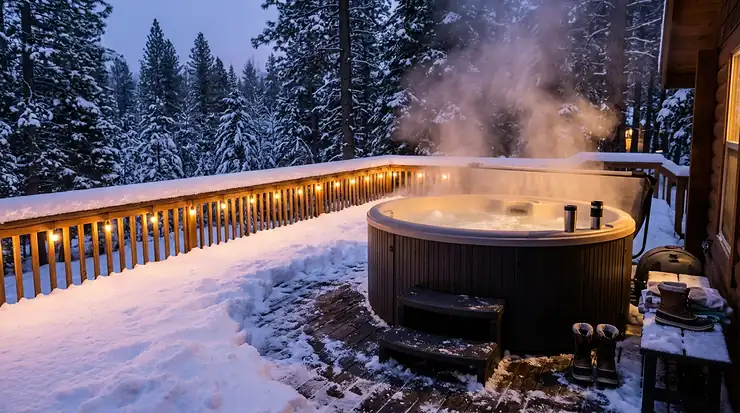
Snow is falling. Your breath hangs in the air like stage fog. You’re shoulder-deep in 104°F water with the jets rumbling and steam curling off the surface. That is the promise of an inflatable hot tub for cold winter climates, and in 2026 it is a promise you can mostly keep.
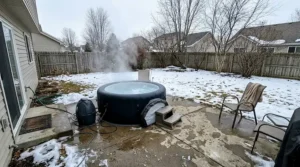
Mostly. Soaking in heated water is an ancient habit, but an inflatable lives by different rules than a foam-packed acrylic shell. Its walls are air-filled PVC, its heater is rated in the low thousands of watts, and its pump can freeze solid if you ignore the forecast. Some models are built for that fight. Others are summer toys wearing a winter costume.
So what separates a winter-capable tub from a fair-weather one? Five things, and we’ll cover each in depth:
- Wall construction: how the shell is built.
- Freeze protection: what the pump does when the air turns ugly.
- Heat retention: how well the water holds its temperature.
- Cover quality: how much the lid actually insulates.
- Heater wattage: whether the heater can keep up with your water volume.
You’ll find seven real models below, with spec-sheet math, honest analysis and a winter setup playbook.
A quick note on how this guide works. Nobody behind it has soaked in these tubs, so you won’t find invented anecdotes. What you will get is spec comparison, aggregated review patterns and straight reasoning. That is more useful than a fake testimonial anyway.
Quick Comparison: 7 Winter-Ready Inflatable Hot Tubs at a Glance
| Model | Capacity | Freeze Protection | Price Range | Best For |
|---|---|---|---|---|
| Intex PureSpa Greywood Deluxe | 4 (6-person version also sold) | None listed; relies on insulated cover | ~$700–$900 | Daily soakers who keep the heater running |
| Coleman SaluSpa Palm Springs | 4–6 | Freeze Shield | ~$650–$740 | Hard-freeze peace of mind |
| Bestway SaluSpa Hawaii | 4–6 (square) | Freeze Shield | ~$600–$850 | App control and scheduling |
| Intex PureSpa Bubble Massage 6-Person | 6 | Not listed; foam cover | ~$800–$850 | Big groups and extra water volume |
| Bestway SaluSpa Cancun | 2–4 | Freeze Shield | ~$450–$500 | Budget winter entry |
| Bestway SaluSpa Miami | 2–4 | Freeze Shield on newer pumps (confirm) | ~$450–$580 | Couples and small patios |
| Bestway SaluSpa Hollywood Luxe | 4–6 | Freeze Shield | ~$800–$830 | Premium-feel family soaks |
Prices are ranges seen across retailers at the time of research and may vary, so check current price before buying.
Look at the table and one pattern jumps out. The Bestway SaluSpa Cancun and Bestway SaluSpa Miami deliver freeze protection at the lowest prices, but their 2–4 person capacity caps your guest list. The Intex PureSpa Greywood Deluxe skips automatic freeze protection and spends the difference on sturdier walls and an insulated cover. Winter buyers therefore choose between an automatic safety net and brute-force insulation.
The Coleman SaluSpa Palm Springs and Bestway SaluSpa Hollywood Luxe try to offer both. If your winters regularly dip below freezing, those are the rows to circle first.
💬 Just one click — help others make better buying decisions too!😊
Top 7 Inflatable Hot Tubs for Cold Winter Climates: Expert Analysis
Each pick below gets the same treatment: specs translated into real-world meaning, aggregated review patterns and a plain-English verdict. Review commentary reflects themes in published retailer listings and roundups, not personal testing.
1. Intex PureSpa Greywood Deluxe — sturdy walls plus a genuinely insulated cover
The standout here is construction. Owners on hot tub forums, as summarized in 2026 roundups, credit the insulated cover with the gap between a tub that holds temperature overnight and one that doesn’t.
The 4-person version (model 28439EP) holds roughly 210 gallons in a 77-inch outer diameter that stands 28 inches tall. It has 140 bubble jets. Its 1,300W heater runs on standard 110–120V household current, and Intex’s listing for this family quotes a temperature rise of roughly 2–3°F per hour. In practice, heating cold fill water to 104°F is an overnight project, not an afternoon one.
Based on the spec comparison, this tub suits people who will soak all winter and care about heat retention. One caveat: per one 2026 roundup, it lacks a dedicated factory freeze-protection mode. In a deep freeze you rely on keeping the heater running under a sealed cover rather than on an automatic anti-freeze cycle.
Aggregated reviews are the biggest asset. One roundup tallies about 770 Amazon ratings averaging 4.3, mostly five-star. Recurring complaints center on fiddly setup, occasional air leaks and slow customer support.
Pros:
- ✅ Fiber-Tech beam walls stay rigid
- ✅ Insulated cover included in the box
- ✅ Large review base makes research easy
Cons:
- ❌ No factory freeze-protection mode
- ❌ Heavy at about 103 pounds, with a 1-year warranty
Expect roughly $700–$900 depending on bundle. For someone running the heater daily, that is fair value.
2. Coleman SaluSpa Palm Springs — freeze protection with app control
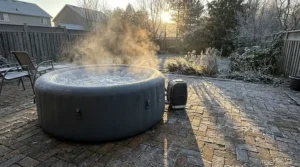
This model’s selling point is that freeze protection is a named, built-in feature. It uses the Freeze Shield system that Bestway puts across its Lay-Z-Spa and SaluSpa lines, so the safeguard isn’t a hopeful assumption.
The round 4–6 person tub is 77 inches across and 28 inches tall, with 140 AirJets. Freeze Shield activates when outside temperature falls below about 6°C (roughly 43°F). The pump then circulates mildly heated water so the pump and pipes don’t freeze. It also has a power-saving timer, and the Smart version adds app control.
On paper, the EnergySense cover is the other winter feature. Roundups cite a “40% more efficient” claim, but that is manufacturer marketing, not an independent measurement. Treat it as a promising direction rather than a guarantee.
Review data is thinner than for the Intex. Retailer listings show averages around 4.4–4.5, but from review pools of only a couple dozen. That is a good sign with limited statistical weight.
Pros:
- ✅ Named Freeze Shield protection
- ✅ App control and a 40-day heating timer
- ✅ Efficient-cover design aimed at winter use
Cons:
- ❌ Small review pools on some versions
- ❌ Efficiency claims come from the manufacturer
Prices run roughly $650–$740. If hard freezes keep you up at night, this is arguably the most reassuring tub on the list.
3. Bestway SaluSpa Hawaii — scheduling power for cold-fill days
The Bestway SaluSpa Hawaii is the square-shaped 4–6 person tub with 140 AirJets, a multi-layer EnergySense cover and Freeze Shield. Smart versions add SmartSpa app control for temperature, timer, filter and massage.
Scheduling matters more in winter than people expect. Lay-Z-Spa’s Hawaii FAQ says to expect 12 to 24 hours to heat cold water to 40°C. Being able to start heating from your phone before you leave work is a practical win. The pump is built into the liner (Bestway calls it UltraFit), which keeps the footprint tidy. Insulation still depends on the cover seating well.
The square shape adds seating logic, with space for more bodies than the same-width round tubs. More water also means more to heat. The analytical takeaway is to pick this one for scheduling and group size, not for the cheapest possible winter bill.
Retailer pages show ratings in the mid-4s on modest review counts. Smart bundles get praised for convenience, and reviewers of inflatables generally flag pump noise and filter upkeep.
Pros:
- ✅ App control for pre-heating
- ✅ Freeze Shield with EnergySense cover
- ✅ Square layout seats groups comfortably
Cons:
- ❌ Long cold-start heat-up times
- ❌ More water volume to keep warm
Price runs roughly $600–$850 depending on bundle. Strong value for planners.
4. Intex PureSpa Bubble Massage 6-Person — 290 gallons of thermal mass
Large water volume is this tub’s quiet winter advantage. At 290 gallons, it holds temperature more steadily than small tubs once it is hot, because more water stores more heat.
It has 140 bubble jets, a built-in hard water treatment system and a high-density foam cover per roundups. Intex’s manual lists a temperature range up to 104°F. Spec pages for the broader family cite Fiber-Tech beam construction and a PTC heater.
Here is the trade-off. More water means longer heat-up and more total energy to bring it to temperature. This tub rewards owners who keep it hot all season rather than heating it for occasional weekends.
Review coverage is broad across retailers. Common praise centers on the hard water system, while owners of Intex spas more generally mention air leaks and setup learning curves.
Pros:
- ✅ Big water volume steadies temperature
- ✅ Built-in hard water treatment system
- ✅ Foam cover suited to cold weather
Cons:
- ❌ Slow initial heat-up
- ❌ No automatic freeze mode listed
Price sits around the mid-$800s. Best for hosts who treat winter as hot tub season.
5. Bestway SaluSpa Cancun — the cheapest way to get automatic freeze protection
This is the budget answer. It has Freeze Shield, DuraPlus material and a quiet heater at the lowest price in this roundup.
The round 2–4 person tub measures 71 by 26 inches, holds about 177 gallons and has 120 AirJets. Smaller water volume means less to heat, so the same heater works less hard than it would on a family-sized tub. Roundups call the 4-person footprint the sweet spot for winter, and a 2–4 tub like this sits even more efficiently.
Ratings in roundups land in the low-to-mid 4s, though retailer review pools are thin. That is typical for newer models. Reviewers of small inflatables often say the stated capacity is optimistic, so think of it as a couple’s tub that fits a third person.
Pros:
- ✅ Freeze Shield at a budget price
- ✅ Small water volume heats efficiently
- ✅ DuraPlus material built for durability
Cons:
- ❌ Roomy for two, tight for four
- ❌ Fewer reviews to learn from
Price sits around $450–$500. A solid pick if budget and winter use both matter.
6. Bestway SaluSpa Miami — the crowd favorite that earns its reputation
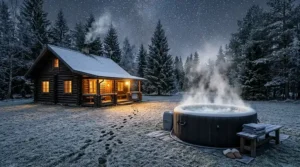
The Bestway SaluSpa Miami has the largest review base on the list. Its 71 by 26 inch round body fits two to four people and has 120 AirJets. It offers two massage intensity levels.
One review site notes an Amazon average of 4.3 from more than 2,400 ratings, and a one-year warranty. Those numbers matter because a big review pool exposes failures fast. One reviewer says it fits 2–3 adults comfortably in real use, even though it is marketed for 4.
Newer pumps are compatible with Freeze Shield, and a Tractor Supply listing for a similar 71 by 26 inch Bestway tub confirms the feature. Since older Miami models existed, check the box or listing for Freeze Shield before buying. A retailer Q&A for another SaluSpa notes about 12 amps of draw at 68°F, so plan the circuit accordingly.
Pros:
- ✅ Huge review base builds confidence
- ✅ Compact footprint suits small patios
- ✅ Two massage intensity levels
Cons:
- ❌ Real capacity is closer to 2–3 people
- ❌ Freeze Shield varies by version
Price sits roughly $450–$580. A reliable pick for couples.
7. Bestway SaluSpa Hollywood Luxe — premium finish with winter features
The Bestway SaluSpa Hollywood Luxe is a round 4–6 person tub (77 by 26 inches) with an EnergySense cover and Freeze Shield. Its DuraPlus material is stress-tested to resist tears and minimize stretching.
Material stretch matters in cold weather. If walls sag under load, the cover stops sitting tightly, and gaps leak heat. A material that holds shape keeps the cover seated.
Retailer data shows a 4.3 rating across 144 reviews, which is reasonable for its price tier. Reviewers of this class often value the more finished look and note that heat-up times still run long when starting cold.
Pros:
- ✅ Freeze Shield plus EnergySense cover
- ✅ DuraPlus material resists stretching
- ✅ More polished look than budget models
Cons:
- ❌ Premium price for an inflatable
- ❌ Heat-up still takes many hours
Price runs around $800–$830, and it earns that for owners who want the nicest all-around package.
Here is how the seven compare on the specs that decide winter performance:
| Model | Jets | Cover | Heater Info | Best For |
|---|---|---|---|---|
| Intex PureSpa Greywood Deluxe | 140 bubble | Insulated | 1,300W (listed) | Heat retention |
| Coleman SaluSpa Palm Springs | 140 AirJet | EnergySense | Check manual | Freeze protection |
| Bestway SaluSpa Hawaii | 140 AirJet | EnergySense | Check manual | Scheduling |
| Intex PureSpa Bubble Massage 6-Person | 140 bubble | Foam | Check manual | Big groups |
| Bestway SaluSpa Cancun | 120 AirJet | Standard/energy-efficient | Check manual | Budget |
| Bestway SaluSpa Miami | 120 AirJet | Reinforced | Check manual | Small spaces |
| Bestway SaluSpa Hollywood Luxe | AirJet | EnergySense | Check manual | Premium feel |
Heater details are not consistently published for every model, which is why “check manual” appears so often. Only the Intex listing gives a clear wattage, so verify the rest before you buy. In short, the Intex PureSpa Greywood Deluxe is the best-documented option, the Coleman SaluSpa Palm Springs is the safest in a freeze and the Bestway SaluSpa Cancun is the cheapest way in.
Winter Setup Guide: Running an Inflatable Hot Tub for Cold Winter Climates
Good setup does more for winter performance than any single feature. Follow this sequence:
- Pick a sheltered spot. A fence, wall or hedge blocks wind, and wind steals heat faster than most people expect. Keep the spot flat and within easy reach of a dedicated outlet.
- Insulate the floor. Frozen ground is a giant heat sink. Put a thermal ground cloth, foam mats or both under the tub. The Intex PureSpa Greywood Deluxe ships with a ground cloth, and extra foam mats are cheap insurance.
- Inflate and fill. Intex’s manual notes that air pressure fluctuates with temperature, so re-inflate if walls feel soft after a cold night.
- Heat with the cover on, jets off. Intex’s manual advises against running the bubble jets for long while heating, because they introduce cooler air.
- Plan for patience. Lay-Z-Spa says a cold-fill Hawaii takes 12 to 24 hours to reach 104°F. A cover speeds that up.
Common mistakes in the first 30 days include removing the cover too early, skipping the ground mat, letting snow pile up unchecked and running jets while heating. All four are free to fix.
Keep the tub running once it’s hot. Letting it fully cool and reheat costs more than holding temperature, and it exposes the pump to freezing risk.
✨ Don’t Miss These Exclusive Deals!
🔍 Take your winter soaks to the next level with these carefully selected tubs. Click on any highlighted product to check current pricing and availability. The right tub makes frosty nights something to look forward to!
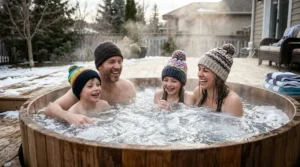
Real-World Scenarios: Which Winter Household Needs Which Tub?
Here are three buyer profiles, each matched to a model with reasoning. They are hypothetical scenarios, not personal anecdotes.
The cold-region family of four. Picture a backyard where January nights sink to the single digits and the tub gets used three or four evenings a week. Heat retention and freeze safety both matter. The Coleman SaluSpa Palm Springs gives automatic freeze protection, and the Intex PureSpa Greywood Deluxe gives sturdier insulation. With roughly $650–$900 to spend, I’d weigh whether a power outage or a daily-heat bill worries you more. Outage worries point to the Coleman. Daily heat-bill worries point to the Intex.
The couple on a small deck. Weekends only, winters that hover in the 30s°F, limited space. The Bestway SaluSpa Cancun or Bestway SaluSpa Miami fits. Both have compact water volume that heats efficiently, and both sit in the $450–$580 range. Add a ground mat and a windbreak and you’ve covered most of the heat loss.
The weekend host. Six friends, frequent gatherings, cold evenings. The Intex PureSpa Bubble Massage 6-Person holds the most water, and the Bestway SaluSpa Hawaii adds scheduling so the tub is hot when guests arrive. Budget around $600–$850. Expect longer heat-up and keep the heater running through the season.
The decision rule: if freezing temperatures could catch the tub idle, prioritize automatic freeze protection. If you’ll soak almost daily, prioritize insulation and heat retention.
Winter Problems and Solutions: Fixes for Common Cold-Weather Headaches
Problem: the water won’t reach 104°F. Check the cover seal first, then add a ground mat and a windbreak. Keep jets off while heating. If the tub still struggles, you may be asking a modest heater to warm too much water.
Problem: the GFCI keeps tripping. Use a dedicated circuit and avoid extension cords. A heater alone at 1,300W draws roughly 10.8 amps at 120V, which crowds a shared 15-amp circuit once the pump runs. Cold, damp weather can also nudge a tired GFCI into tripping, so test it.
Problem: snow and ice build up on the cover. Brush snow off regularly so its weight doesn’t deform the cover. Never chip ice off with metal tools.
Problem: the water goes cloudy. Test pH and chlorine weekly and clean filter cartridges. The CDC’s guidance in the safety section below applies year-round.
Problem: the power goes out in a hard freeze. Freeze protection only works while the unit has power. If an outage will last many hours, drain the tub before temperatures fall. Frozen water expands, and that can burst components.
What Is an Inflatable Hot Tub for Cold Winter Climates?
An inflatable hot tub for cold winter climates is a portable, air-walled spa built or equipped for freezing weather. It combines a heater, an insulated cover, freeze protection for the pump and rigid wall construction so water stays warm and equipment stays safe when outdoor temperatures drop.
In plain terms, this is not a pool toy repurposed for winter. Winter-ready models add features that general-purpose inflatables skip. Many manufacturers rate their tubs to operate down to roughly 40°F ambient, while owners report running them in colder conditions. Anything below the rated range is on you, and it may affect warranty coverage, so read the manual.
Freeze protection is a safeguard while the tub sits idle in the cold. It is not a promise that you can ignore temperature, and it is not a substitute for insulation, a good cover and a ground mat.
How to Choose an Inflatable Hot Tub for Cold Winter Climates
Follow these seven steps, in order:
- Match size to your heater. A 4-person tub is the winter sweet spot, with less water to heat and less surface losing heat to the air.
- Decide how you’ll handle freezing. Choose automatic freeze protection, or plan to keep the heater running continuously.
- Inspect the wall construction. Look for rigid, multi-layer walls (Fiber-Tech, DuraPlus, Tritech) that won’t sag in cold.
- Examine the cover. Thick, well-fitted covers with lock clips matter more than jet counts.
- Compare heater wattage to water volume. Divide the wattage into the gallons and compare heat-up rates.
- Confirm electrical needs. Plan a dedicated GFCI-protected circuit.
- Budget for the base. Add a thermal ground cloth or foam mats.
The idea is to shop by winter performance, not by jet count or color.
Insulated Inflatable Hot Tub for Freezing Temperatures: What the Walls Really Do
An insulated inflatable hot tub for freezing temperatures leans on three layers of defense: wall construction, cover and base. Wall construction gets the marketing, so here is what it actually does.
Internal beams (Fiber-Tech on Intex) keep walls rigid. Rigid walls hold their shape, and a stable shape lets the cover seat tightly. Bestway’s DuraPlus and Tritech materials make a similar promise, resisting stretching and punctures.
Air-filled walls do insulate somewhat, but they can’t match a foam-packed acrylic cabinet. Here is how the two compare:
| Feature | Inflatable | Hard-Shell Acrylic | Best For |
|---|---|---|---|
| Wall insulation | Air chambers plus cover | Full-foam cabinet | Hard-shell: sub-zero regions |
| Upfront cost | Low | Usually a multiple of inflatable cost | Inflatable: budgets |
| Portability | Deflates for storage | Permanent | Inflatable: renters |
| Winter heat holding | Good with cover and mat | Typically stronger | Hard-shell: frequent use |
A Minnesota hot tub dealer’s guidance lists full-foam insulation and tight-sealing energy-efficient covers among winter essentials. Hard-shell tubs win on pure insulation, but inflatables win on price and portability. For many households, a well-insulated inflatable with a good cover covers most winter evenings at a fraction of the cost.
Inflatable Hot Tub with Freeze Protection: How Freeze Shield Works
An inflatable hot tub with freeze protection monitors outside temperature and acts automatically. Lay-Z-Spa says Freeze Shield activates when outside temperature drops below about 6°C, circulating warm water so the pump and pipes don’t freeze. A retailer listing for the Bestway SaluSpa Cancun‘s sibling models says it maintains internal temperatures between 42°F and 50°F.
That is helpful, but know the limits:
- It needs power. In an outage, nothing circulates.
- It protects components, not comfort. The tub won’t be soak-ready automatically.
- It varies by model. The Intex PureSpa Greywood Deluxe reportedly lacks it, while the Coleman SaluSpa Palm Springs, Bestway SaluSpa Hawaii and Bestway SaluSpa Hollywood Luxe include it.
Treat freeze protection as a seatbelt, not a bus. Insulation, a good cover and a heated tub remain the main strategy.
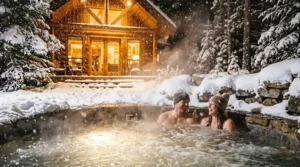
Heat Retention: Why Winter Water Cools Faster Than You Expect
Heat retention decides your winter bills. Heat escapes through four routes: the surface, the walls, the floor and the plumbing. The surface is usually the biggest, which is why a tight cover matters so much.
Insulation is measured by R-value, and the higher the R-value, the slower heat flows through a material. Spa covers for inflatables rarely publish R-values, so judge them by thickness, fit and seal.
The floor is the underrated route. Frozen ground pulls warmth out through the tub’s base, which is why mats matter. A forum thread shows owners even experimenting with foam boards underneath and spray foam on the outside walls, a sign of how much heat leaks.
Water volume helps too. More water stores more heat, but it also takes longer to bring to temperature. That is why the 4-person tub is a sweet spot for many winter owners.
Wind is the invisible thief. A simple fence can reduce losses, and it costs far less than a bigger heater.
Thermal Cover Insulation: The Cheapest Upgrade You Can Make
Thermal cover insulation is the single most cost-effective winter factor. A tub with a great heater and a leaky cover will lose the race to a modest tub with a tight, thick lid.
Check the fit. Covers with safety lock clips seat tighter and resist wind. Check thickness. Bestway’s EnergySense covers use multi-layer material, and Intex offers energy-efficient and foam covers. Check condition. A waterlogged cover insulates poorly, so replace it when it sags.
Habits matter more than hardware. Keep the cover on until you step in, and replace it the moment you step out. Every minute uncovered, the heater works harder.
The “40% more efficient” and “50% more efficient” claims you’ll see on some listings are manufacturer figures. They signal intent, but compare the cover’s physical build rather than trusting the percentage.
Heater Wattage: What 1,300 Watts Can and Cannot Do
Heater wattage tells you how fast a tub warms, but not how well it holds heat. Here is the back-of-envelope math for the Intex PureSpa Greywood Deluxe.
A 1,300W heater delivers roughly 4,436 BTU per hour. The 4-person tub holds about 210 gallons, or around 1,751 pounds of water. Dividing gives an ideal temperature rise of about 2.5°F per hour with zero losses. That lines up with Intex’s listed 2–3°F per hour.
The 6-person version holds roughly 290 gallons (about 2,419 pounds), which gives an ideal rise near 1.8°F per hour, consistent with Intex’s quoted 1–2°F. In winter, wind and cold ground eat into those numbers, so real rise will be lower.
Electrical limits matter too. A 1,300W heater draws about 10.8 amps at 120V. Add the pump and the circuit gets crowded. The CPSC recommends GFCI protection for electrical equipment around pools, spas and hot tubs, so use a dedicated GFCI-protected outlet.
Higher wattage isn’t automatically better in a 120V tub, because circuit limits cap it. Match your wattage to your water volume, and verify the number in your manual.
Long-Term Cost and Maintenance
Cost-of-ownership math matters more than sticker price. Here is an illustrative example, not a forecast: if a 1.3 kW heater effectively ran eight hours a day in a deep freeze, it would use about 10.4 kWh daily. At an example rate of 16 cents per kWh, that is roughly $1.66 a day, or about $50 a month. Your electricity rate and weather will differ, and the blower adds to the bill.
Ways to lower the bill:
- Keep the cover tightly sealed.
- Add floor insulation.
- Block the wind.
- Hold a steady temperature instead of reheating from cold.
- Use the heating timer to avoid idle heat.
Budget for recurring costs too: filter cartridges, test strips, chemicals and patch kits. Most listings carry a one-year manufacturer warranty, so inspect seams and the pump early.
Value verdict: a $450–$900 inflatable plus winter running costs often beats the upfront cost of a hard-shell, but only if you actually use it.
Safety, Electrical and Water Quality Guide
Winter adds ice, slips and cold exits to the usual hot tub hazards.
Electrical. Use a dedicated GFCI-protected outlet, avoid extension cords and keep electrical devices away from the water. Test the GFCI monthly.
Temperature. Keep water at or below 104°F (40°C), a limit the CDC lists in its hot tub guidance. Limit session length, and consult a doctor if you have heart or blood pressure concerns.
Water chemistry. The CDC recommends a pH of 7.0–7.8 and at least 3 ppm of chlorine for hot tubs. It also recommends avoiding cyanuric acid products in hot tubs, so read the label on any chlorine you buy. Covers reduce disinfectant loss, a point the CDC notes in its operator guidance.
Surroundings. Clear paths of ice and snow, use non-slip footwear and keep towels close. Don’t use the tub during thunderstorms.
FAQ
❓ How long does an inflatable hot tub take to heat in winter?
❓ Is a 4-person or 6-person tub better for freezing weather?
❓ Do I need a ground mat under the tub in winter?
❓ Can I use a hot tub during a snowstorm?
❓ What happens if the power goes out in freezing weather?
Conclusion
Choosing an inflatable hot tub for cold winter climates comes down to a few honest trade-offs. Automatic freeze protection brings peace of mind, and thick insulation brings lower bills. Water volume brings stable heat, and a small footprint brings fast heat-up.
For most cold-climate households, the Coleman SaluSpa Palm Springs is the safest freeze-ready pick. The Intex PureSpa Greywood Deluxe is the best-documented heat holder. The Bestway SaluSpa Cancun is the cheapest way in, and the Bestway SaluSpa Hollywood Luxe is the premium all-rounder. Big groups should look at the Intex PureSpa Bubble Massage 6-Person or the Bestway SaluSpa Hawaii.
Whatever you choose, the cheap fixes do most of the work: a floor mat, a windbreak, a tight cover and a dedicated GFCI circuit. Do those four things and even a modest tub becomes a proper winter retreat.
✨ Ready to Turn Winter into Spa Season?
🔍 Compare current pricing and availability on the models above, then pick the one that matches your climate and your crew. Snowy evenings are better from the water. 🛁❄️
Recommended for You
- Quiet Inflatable Hot Tub for Backyard Privacy: 7 Best Picks 2026
- AirJet vs HydroJet Inflatable Hot Tub: 7 Ultimate Picks 2026
- Inflatable Hot Tub for Back and Muscle Pain Relief: 7 Top Picks 2026
Disclaimer: This article contains affiliate links. As an Amazon Associate, I earn from qualifying purchases. If you purchase products through these links, we may earn a small commission at no additional cost to you.
✨ Found this helpful? Share it with your friends! 💬🤗
