
In This Article
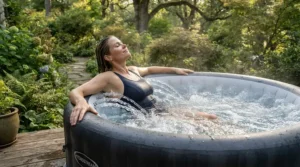
Picture the end of a brutal Tuesday. Your lower back feels like a rusted hinge, your shoulders are up around your ears, and the couch is offering nothing but a different kind of ache. Now picture sinking chest-deep into 102°F water while a curtain of bubbles rolls up your spine. That’s the promise behind an inflatable hot tub for back and muscle pain relief, and it’s why these blow-up spas have gone from novelty to backyard staple.
Here’s the part the box art won’t say out loud: not every inflatable spa treats a sore back equally. Most use air jets, which are fizzy and gentle. A handful add true water jets that push against your muscles. Where those jets sit relative to your lumbar spine matters more than the number printed on the box.
So this guide goes past the spec sheet. You’ll get seven real models, an honest read on what air jets can and can’t do, and a plain-English look at the hydrotherapy research. You’ll also get a soak routine and a safety section, because 104°F is a ceiling, not a target. Everything here is analysis built on published specs and aggregated reviewer sentiment. Nothing is based on hands-on testing, and where I couldn’t verify something, I’ll say so.
Quick Comparison: 7 Inflatable Spas Built for Sore Backs
| Product | Jets | Capacity | Price Range* | Best For |
|---|---|---|---|---|
| Intex PureSpa Plus 6-Person | 170 air jets | Up to 6 | ~$700–$1,000 | Strongest air-jet “buzz” for the money |
| Coleman SaluSpa Sicily 5-7 Person | 180 air jets | 5–7 | ~$450–$600 | Tall or broad-shouldered soakers who want room |
| Bestway SaluSpa Hawaii HydroJet | 60 air jets plus corner back-massage jets | 4 | ~$650–$950 | Real water pressure on the lower back |
| Coleman SaluSpa Hawaii AirJet | 140 air jets | 4–6 | ~$550–$750 | Cold-weather use and corner seating |
| Bestway SaluSpa Milan AirJet Plus | 140 air jets | 4–6 | ~$450–$650 | Massage-first value |
| Intex PureSpa Bubble Massage (28425EH) | 120 air jets | 4 | ~$500–$700 | Small yards, steady heat |
| Lay-Z-Spa Santorini HydroJet Pro | 180 air jets plus 10 water nozzles | 5–7 | Four figures where sold | Closest to a hard-shell feel |
*Ranges are approximate at the time of research. Prices vary by retailer and change often, so check current price before buying.
Look at the table through a pain-relief lens and two things stand out. The Coleman SaluSpa Sicily and Intex PureSpa Plus pile up the most air jets, but jet count is a volume knob, not a pressure gauge. If your goal is directional force on tight muscle, the Bestway SaluSpa Hawaii HydroJet and Lay-Z-Spa Santorini HydroJet Pro are the only two here that move actual water, and you’ll pay for that difference.
💬 Just one click — help others make better buying decisions too!😊
What Is an Inflatable Hot Tub for Back and Muscle Pain Relief?
An inflatable hot tub for back and muscle pain relief is a portable, air-filled spa that heats water to roughly 100–104°F and uses jets to massage your back and muscles. Warmth relaxes tight tissue and buoyancy takes load off your spine. Jets add rhythmic pressure. Most models plug into a standard outlet and set up in under an hour.
That definition covers the whole category, but the details are where it gets interesting. This kind of soaking falls under hydrotherapy, the therapeutic use of water, which people have relied on for centuries for stiff joints and tired muscles. An inflatable spa is simply the most affordable way to bring a version of it home.
Think of it as the difference between a heating pad and a warm-water hug. A heating pad warms one patch of skin. A hot tub surrounds you, supports your weight, and warms your hamstrings, glutes, and lower back at the same moment. That’s the honest appeal. It isn’t magic, but it is a very pleasant way to build a daily recovery habit.
Top 7 Inflatable Hot Tubs for Back and Muscle Pain Relief: Expert Analysis
1. Intex PureSpa Plus 6-Person (28431EP) — loudest bubble massage in its class
The 170-jet ring is the headline here. Roundups consistently single out this model as the pick for people who want an intense massage feel in an easy-to-install format, and its heater tops out at 104°F.
Those 170 air jets form a dense band of bubbles around the floor, so there’s less chance you’ll sit in a “dead zone.” Headrests and LED lighting come with the 6-person version, and the roomy interior lets you shift a few inches to relocate the bubble stream along your spine. Remember, though, that these are air jets. They tickle and buzz rather than knead, so expect surface-level relief that complements the heat.
This is a good match for people with general stiffness who want a big, social tub. Reviewers repeatedly praise the strength and evenness of the massage. Some note that careful setup and water balancing are part of the deal. I couldn’t verify a large pool of independent owner reviews for every variant, so treat that sentiment as directional.
Pros:
- ✅ Dense 170-jet coverage across the whole floor
- ✅ Spacious enough to reposition against the jets
- ✅ Headrests and lighting included
Cons:
- ❌ Air jets, not true pressure massage
- ❌ Takes up serious yard space
Price range: roughly $700–$1,000. Verdict: strong value if bubbles and space matter more than deep pressure.

2. Coleman SaluSpa Sicily 5-7 Person — most jets per dollar
At 180 jets across an 85-inch round body, the Sicily gives you the most massage surface in this lineup, and it tends to land at the friendlier end of the price spectrum. It’s marketed as an energy-efficient family tub with strong massage features.
What does that mean for a sore back? Width is underrated. A large interior lets you recline instead of perch, and a semi-reclined posture lets your lower back meet the jet ring more directly. The 28-inch wall height means water reaches your shoulders when you sit low, so your upper traps and neck get warmed too.
I’d point this toward tall soakers, couples, and anyone who hates feeling folded into a small tub. The trade-off is the bigger footprint and a larger volume of water to heat, which will show up on your electric bill. Because it’s a seating-forward design, you won’t find dedicated lumbar nozzles either.
Pros:
- ✅ 180 jets, the highest air-jet count in this group
- ✅ Generous room to recline and reposition
- ✅ Often priced below its closest rivals
Cons:
- ❌ Larger water volume means slower heating
- ❌ No dedicated lumbar nozzles
Price range: roughly $450–$600. Verdict: arguably the best value for a roomy, bubbly soak.
3. Bestway SaluSpa Hawaii HydroJet — water jets aimed at your back
This is the one that changes the conversation. A published review of this model describes real water-massage jets in each corner, aimed at the back, and says everyone who tried them loved the feeling on a sore back. Specs listed for the reviewed unit include a 222-gallon capacity, 120V power, seating for around four, and a Freeze Shield feature for cold-weather use.
Why does this matter? Water is dense. Even a modest stream carries far more directed force than a cloud of bubbles, so those corner jets can feel like a thumb pressing along the muscle beside your spine. If your pain lives in the lower back, this layout gives you something to lean into.
The same review flags the lack of structured seating, so you’ll be adjusting your posture to find the sweet spot. It also notes a six-day delivery wait. I’d steer this toward anyone whose back pain feels like knots instead of general achiness.
Pros:
- ✅ Real water jets in the corners hit the back
- ✅ Freeze Shield supports cooler-weather soaks
- ✅ Compact enough for smaller patios
Cons:
- ❌ No structured seating
- ❌ Seats fewer people than the big air-jet tubs
Price range: roughly $650–$950. Verdict: the best entry point for true hydrotherapy-style pressure.
4. Coleman SaluSpa Hawaii AirJet — corner seats and cold-weather confidence
The square shape is more than aesthetics. With 140 air jets in a 71 × 28 inch footprint, corners create natural seating positions that a round ring can’t. One buying guide notes the tub typically holds 104°F without constantly cycling, and its Freeze Shield function adds peace of mind on cool nights.
Why that helps recovery: consistency. A tub that holds heat reliably is one you’ll actually use after work in October. Corner seating also locks your pelvis in place, which keeps your lower back at a steadier height relative to the jets.
Think of this as the dependable commuter car of the group. It won’t dazzle with pressure, but its air-jet massage is described as satisfying, and it’s easy to live with. I couldn’t verify detailed owner-review volumes for this exact variant.
Pros:
- ✅ Square corners stabilize your seated position
- ✅ Freeze Shield protects pumps in cold snaps
- ✅ Good heat retention reported by owners
Cons:
- ❌ Air jets only
- ❌ Slightly pricier than similarly sized round tubs
Price range: roughly $550–$750. Verdict: a solid, practical choice for year-round routines.
5. Bestway SaluSpa Milan AirJet Plus — massage-first on a modest budget
One buying guide calls the Milan the massage-first pick of the inflatable tier, with 140 AirJets ringing a 77-inch round tub. It’s built by Bestway, the company behind the entire SaluSpa line.
The practical upside is intimacy. A 77-inch round tub means everyone sits close to the jet ring, so bubbles are rarely far from your back. That proximity can make a 140-jet system feel more intense than the number suggests, simply because you’re not floating in a cavernous basin.
I’d recommend it to budget-conscious buyers who still want a tub aimed at massage rather than lighting gimmicks. Availability listings for this model have appeared sold out at some retailers, so confirm stock before you fall in love.
Pros:
- ✅ 140 jets close to your torso
- ✅ Focused on massage, not extras
- ✅ Friendly entry price
Cons:
- ❌ Stock can be inconsistent
- ❌ Less legroom for taller adults
Price range: roughly $450–$650. Verdict: a smart value play for a back-focused soak.

6. Intex PureSpa Bubble Massage (28425EH) — steady heat for small yards
This four-person round tub carries 120 bubble jets, Fiber-Tech durability, and a saltwater-system-ready design. Owners cited in one 2026 review are described as nearly unanimous about its heat retention, saying it stays hot even on cooler evenings.
For muscle recovery, that stability counts for a lot. Warm water works best when the temperature doesn’t swing, and a tub that cycles less keeps your soak smooth. The 120 jets are described as even rather than aggressive, which makes this a gentle option for people who find stronger massage uncomfortable.
It’s the right fit for solo soakers or couples with limited space. If your pain is acute and you crave deep pressure, you’ll want something else. Think of this as a warm, quiet reset button.
Pros:
- ✅ Reported excellent heat retention
- ✅ Saltwater-system ready
- ✅ Compact footprint
Cons:
- ❌ Gentle massage only
- ❌ Seats four at most
Price range: roughly $500–$700. Verdict: a reliable, no-drama pick for steady relaxation.
7. Lay-Z-Spa Santorini HydroJet Pro — closest an inflatable gets to a hard-shell
Bestway’s HydroJet Pro system combines 180 air jets with 10 water jetstream nozzles. The brand describes adjustable wall nozzles releasing water streams, while bottom jets send bubbles toward your feet and back. The Santorini adds high sides for deeper submersion, bench seating, headrests, LED lighting, and EnergySense insulation.
That blend is the point: heat plus bubbles plus directed water. Deeper submersion also means more of your torso sits in warm water, and bench seating positions your lumbar region near the wall nozzles. It’s the nearest thing to a purpose-built hydrotherapy tub in the inflatable world.
One honest caveat: listings I found were mostly from UK and Australian retailers, so US availability and voltage versions may vary. Verify before ordering. It also costs notably more than the air-jet group.
Pros:
- ✅ 10 adjustable water jetstream nozzles
- ✅ High sides for deeper submersion
- ✅ Insulation designed to cut heat loss
Cons:
- ❌ US availability uncertain
- ❌ Premium pricing
Price range: four figures in markets where it’s sold. Verdict: the ceiling of the inflatable category if budget allows.
How to Choose an Inflatable Hot Tub for Back and Muscle Pain Relief
Choosing well starts with ignoring the jet count on the front of the box. Here’s the order I’d weigh things in, based on the spec comparison above.
- Decide your massage type first. Air jets give fizzy relaxation. Water jets give directed pressure. If your pain feels like knots, prioritize water jets.
- Check seating and depth. A 28-inch wall keeps water at chest level only if you sit low, so look for bench seating or enough interior room to recline.
- Confirm the heater reaches 104°F and holds it. Heat retention beats peak temperature because consistency makes soaking a habit.
- Look at cold-weather features. Freeze Shield or similar protection extends your soak season, and recovery soaks are most appealing when it’s chilly.
- Match capacity to your reality. A 6-person tub for one person wastes electricity and heats slowly.
- Plan the footprint and surface. You need level ground and, ideally, a protective ground cloth or tarp.
- Budget for running costs. Electricity, chemicals, and filters add up, as we’ll cover below.
Inflatable Hot Tub with Strong Massage Jets: Air vs. Water
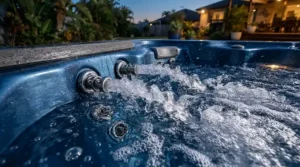
Searching for an inflatable hot tub with strong massage jets can be misleading, because “strong” means different things across brands. One 2026 buying guide puts it bluntly: every inflatable listed bubbles air at you, and only one listing specifies real water jets. That’s the line between fizz and hydrotherapy.
| Jet Type | How It Feels | Best For | Limits |
|---|---|---|---|
| Air bubble jets (Intex PureSpa Plus, Coleman SaluSpa Sicily) | Light, tingling, surface-level | General relaxation, mild stiffness | Little deep-muscle pressure |
| Hybrid HydroJet (Bestway SaluSpa Hawaii HydroJet) | Targeted water on the back | Localized knots, lower back tension | Fewer jets overall |
| HydroJet Pro (Lay-Z-Spa Santorini HydroJet Pro) | Air plus adjustable water streams | The closest inflatable to a built-in spa | Cost and availability |
The table shows why raw jet count can mislead. A tub with 180 air jets can feel gentler than one with a few water nozzles, because water carries more force than air. If “strong” matters to you, shop for water jets first and air jet quantity second.
Lumbar Jet Placement: Where the Massage Actually Lands
Lumbar jet placement is the most overlooked spec in this category. Your lumbar spine sits at roughly the same height as your waist, so a jet only helps if it’s aimed there when you’re seated, not when you’re standing in the empty tub.
Most inflatables ring the floor with air jets, which hit your calves and hips first. Models with wall-mounted water nozzles, like the corner back jets described in the Bestway SaluSpa Hawaii HydroJet review, are positioned to hit torso height. Bestway’s HydroJet Pro description also says the bottom jets target your feet and back, while the adjustable wall nozzles deliver water streams.
To fine-tune your position, try these tweaks:
- Scoot forward or back a few inches until the jet stream lands on the muscle beside your spine, not on the bone.
- Use a headrest or inflatable cushion to tilt your pelvis slightly back.
- Rotate your torso toward a jet to work one side at a time.
None of the brands publish a true lumbar placement chart, so treat this as reasoned guidance, not a measured spec.
Hydrotherapy: What the Research Actually Says
Let’s separate hope from evidence. A systematic review and meta-analysis in the Journal of Pain Research pooled 16 studies involving 1,656 people with chronic low back pain. It found that hot spring hydrotherapy reduced pain and improved function, with larger effects in adults aged 60 and over.
Here’s the nuance. Those studies involved clinical hot spring therapy, which often combined soaking, jetting, and exercise in mineral water. A backyard inflatable isn’t the same thing. Another systematic review of warm water hydrotherapy (roughly 33–40°C) likewise reported reduced pain and improved function in chronic low back pain, though it’s a less prominent journal.
My read: the evidence supports warm-water immersion as a reasonable comfort and mobility aid. It doesn’t prove an inflatable spa will cure anything. If your pain is severe, new, or radiates down a leg, see a clinician first. Think of a soak as a supportive habit, not a treatment plan.
Hydrotherapy Inflatable Spa for Sore Muscles: Features That Matter (and Those That Don’t)
When shopping for a hydrotherapy inflatable spa for sore muscles, a few features pull real weight. Others are marketing glitter.
Features that matter:
- Heat retention. Insulated walls, a thermal cover, and a tightly sealed lid keep your water warm without constant heating.
- Water jets. Even a few add directional force.
- Seat geometry. Corners and benches lock your posture.
- Freeze protection. Cold-weather features keep the pump safe.
Features that don’t:
- Colored lighting. Pretty, but irrelevant to your back.
- Smartphone apps. Convenient, though they don’t change how a jet feels.
- A giant jet count. Quantity is not pressure.
The main trade-off to understand is that big, bubbly tubs excel at relaxation while smaller hybrids deliver pressure. Match the tool to your pain, and you’ll avoid paying for features you’ll never use.
✨ Don’t Miss These Exclusive Deals!
🔍 Take your recovery routine to the next level with these carefully selected spas. Click on any highlighted product above to check current pricing and availability. A little warm water at the end of the day can add up to a lot of comfort!
Muscle Recovery Soak: A Practical Setup and Routine Guide
A great muscle recovery soak starts before you step in. The first 30 days are where most new owners make mistakes, so here’s a simple playbook.
Setup tips:
- Place a ground cloth or tarp under the tub, since Bestway suggests protecting the underside from rough patios.
- Fill with a hose, and use a thermometer to verify the real water temperature. Don’t rely only on the built-in readout.
- Allow plenty of heat-up time, especially in cooler weather.
Your soak routine:
- Set the water around 100–102°F for most sessions.
- Hydrate before you get in.
- Soak for roughly 15–20 minutes, a commonly cited general guideline.
- Gently stretch your hips and lower back in the water.
- Step out slowly and cool down.
Maintenance: Test and balance the water regularly, rinse or replace the filter cartridge on schedule, and cover the tub when idle. The most common first-month mistake is skipping water testing, which leads to cloudy water and irritated skin. A five-minute weekly check saves a lot of grief.
Real-World Scenarios: Matching Spas to Your Life
Scenario 1: The desk worker with a tight lower back. Imagine a 38-year-old who sits eight hours daily and soaks three evenings a week. The Bestway SaluSpa Hawaii HydroJet makes the most sense because the corner back jets target the exact area that tightens up. The compact size also suits a small patio.
Scenario 2: The weekend athlete. Picture a runner and lifter with sore quads and hamstrings who soaks after long workouts. A big air-jet tub like the Coleman SaluSpa Sicily lets them stretch out fully, and the sheer coverage warms the whole lower body. Budget is friendlier too.
Scenario 3: The cold-climate couple. A pair living somewhere with real winters wants a soak routine all year. The Coleman SaluSpa Hawaii AirJet and its Freeze Shield feature suit them, though they should expect higher winter electric costs and plan for a thermal cover.
The pattern: pick the pain, then pick the jets. Frequency matters too. If you’ll soak four or more times weekly, spending more on heat retention pays you back.
Inflatable vs. Hard-Shell vs. Other Soaking Options
Is an inflatable spa the right move, or should you save for something sturdier? Here’s how the options compare.
| Option | Upfront Cost | Jet Power | Setup | Best For |
|---|---|---|---|---|
| Inflatable air-jet tub | Low | Gentle | Under an hour | Trial-run soakers |
| Inflatable HydroJet tub | Moderate to high | Moderate | Under an hour | Targeted back relief |
| Plug-and-play hard-shell (Lifesmart 4-Person 13-Jet) | Higher | Real water jets from molded seats | Delivery and leveling | Long-term owners |
| Bathtub soak plus heating pad | Very low | None | Instant | Occasional relief |
A hard-shell tub like the Lifesmart 4-Person 13-Jet delivers true water-jet massage from molded seats, which no air-jet inflatable can match. But it demands more money, space, and permanence. For most renters and first-time buyers, an inflatable is the smarter test drive. If you already know you’ll soak daily for years, the hard-shell math starts to look better.
Long-Term Cost and Maintenance
The sticker price is only chapter one. Running costs come from three places: electricity, water treatment, and replacement parts.
Electricity is the big one. Larger tubs hold more water and use more power to heat, so a 6-person spa costs more to run than a 4-person model. Insulated designs and thermal covers help noticeably, as does a built-in timer that heats only when you plan to soak.
Water care is the second cost. Expect sanitizer, pH balancers, and filter cartridges. Inflatable-spa makers recommend regular water changes, and skipping them shortens the life of your pump and liner.
Durability is the wild card. Premium multi-layer materials resist punctures better, but a tarp underneath and a careful eye on sharp edges matter more than any brand claim. Over a few years, a well-kept budget tub can rival the per-soak cost of a gym membership, especially if you use it often. A neglected one becomes an expensive lawn ornament.
Safety Guide: Temperature, Time, and Who Should Skip It
Safety isn’t the sexy part, but it’s the part that keeps your soak from backfiring. The Consumer Product Safety Commission advises that hot tub water should never exceed 104°F and treats 100°F as safe for a healthy adult. It also warns that soaking above 102°F in early pregnancy can harm a developing baby, and it recommends checking the water with an accurate thermometer before you get in.
Other precautions worth following:
- Avoid alcohol while soaking, since the CPSC notes it raises drowning risk.
- Keep a locked cover on when the tub isn’t in use, and supervise children.
- Know where your pump’s cutoff switch is.
- Exit immediately if you feel dizzy, nauseated, or overheated.
If you have heart disease, high blood pressure, or diabetes, or you’re pregnant, talk with your doctor first. WebMD’s hot tub safety guide notes that heat can strain the heart and suggests limiting pregnancy soaks to under 10 minutes at lower temperatures. When in doubt, ask a professional.
Frequently Asked Questions
❓ Can an inflatable spa really ease lower back pain?
❓ Are air jets strong enough for deep muscle knots?
❓ What water temperature works best for a muscle recovery soak?
❓ Can I use an inflatable hot tub in winter?
❓ Which inflatable spa suits a small patio and sore back?
Conclusion
An inflatable hot tub for back and muscle pain relief won’t replace a physical therapist, but it can become the most appealing part of your recovery routine. The real decision comes down to jets. If you want a roomy, bubbly, budget-friendly soak, the Coleman SaluSpa Sicily and Intex PureSpa Plus deliver generous coverage. If you want pressure on your actual lumbar muscles, the Bestway SaluSpa Hawaii HydroJet is the smart middle path, and the Lay-Z-Spa Santorini HydroJet Pro is the splurge. The Coleman SaluSpa Hawaii AirJet, Bestway SaluSpa Milan AirJet Plus, and Intex PureSpa Bubble Massage round out solid choices for cold weather, massage-first value, and steady heat.
Whatever you pick, respect the thermometer, keep soaks to a sensible length, and loop in your doctor if you have health conditions. Warm water is gentle medicine. Used wisely, it can make your evenings a whole lot kinder to your spine.
Recommended for You
- Quiet Inflatable Hot Tub for Backyard Privacy: 7 Best Picks 2026
- AirJet vs HydroJet Inflatable Hot Tub: 7 Ultimate Picks 2026
- Inflatable Hot Tub for Cold Winter Climates: 7 Best Picks for 2026
Disclaimer: This article contains affiliate links. As an Amazon Associate, I earn from qualifying purchases. If you purchase products through these links, we may earn a small commission at no additional cost to you.
✨ Found this helpful? Share it with your friends! 💬🤗
